ALOPECIA AREATA: SYMPTOMS, CAUSES AND REMEDIES
What is alopecia areata? Let's clarify a fairly common condition and try to identify its causes and remedies.
WHAT IS ALOPECIA AREATA?
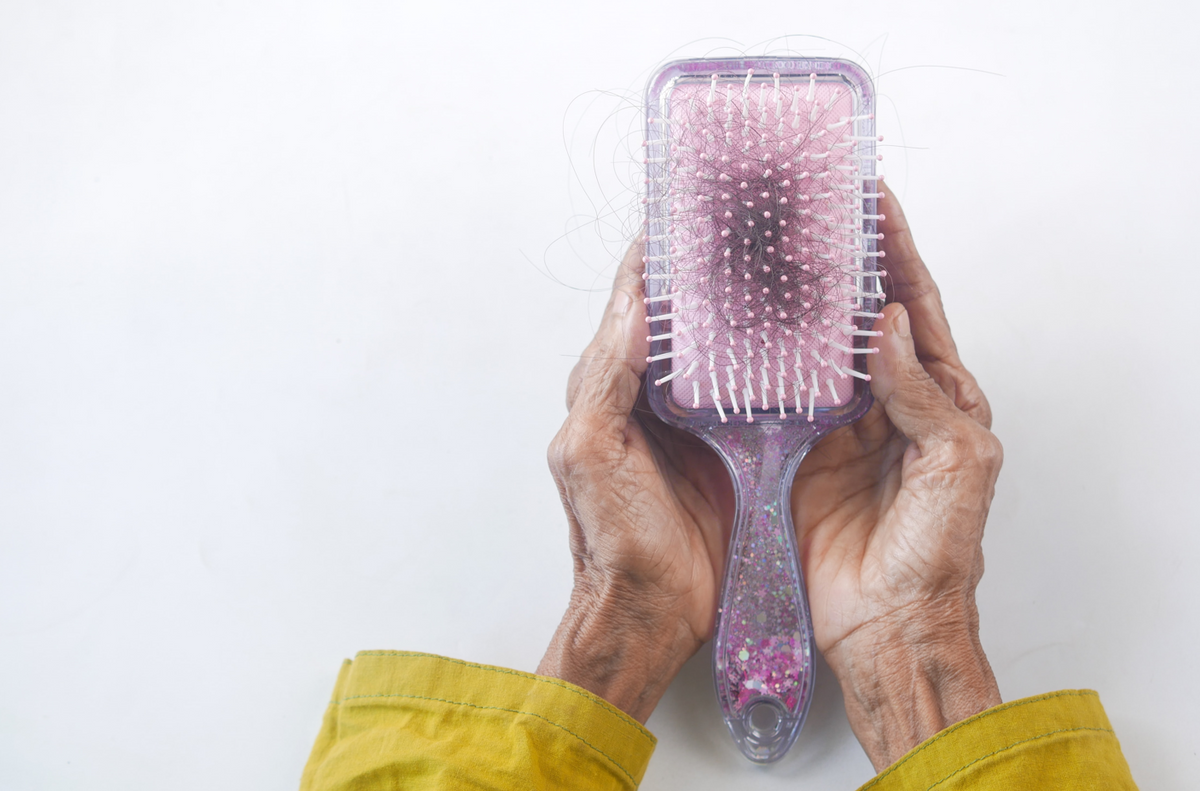
Alopecia areata affects one person in 100 on average and consists of a sudden loss of hair in patches that can occur on any part of the body, affecting both men and women. The main characteristic of alopecia areata is that it is a reversible and temporary phenomenon, unlike androgenetic alopecia, which is permanent and mainly affects men.
In the case of alopecia areata, it is referred to as non-scarring alopecia, meaning the hair follicle is not irreparably damaged, so hair can begin to grow again at any time.
THE CAUSES OF ALOPECIA AREATA
The causes of this condition are still mostly unknown, but researchers believe that alopecia is an autoimmune disease and that autoantibodies are involved, attacking the follicular structure by recognizing it as foreign. The autoantibodies, in fact, act on the follicle in the anagen phase (the growth phase), which reacts by moving directly to the telogen phase (the resting phase in which all functional activities cease and the hair falls out when washed or combed). The hair therefore only manages to develop for a few millimeters before finally falling out.
The hair loss manifests in patches because it affects areas of the scalp where hair is more susceptible than in others. It may appear as a single patch or multiple patches may be present from the start.

PREDISPOSING FACTORS FOR ALOPECIA AREATA
Firstly, it is a genetic condition, so it is possible to trace other cases in one's family. Secondly, it is a condition that can often be caused by psychological trauma or a period of high stress, events that therefore have a strong emotional impact. This disease usually strikes during puberty and in the age range between 20 and 40 years old.
COURSE OF ALOPECIA AREATA
Another particularity of this condition is that its course is highly variable; it is not possible to make a prediction. In some cases, it regresses naturally within a few months, and hair regrowth is seen within the year even without any treatment. In other cases, after an initial recovery, the condition may reappear.
WHEN TO SEE A DOCTOR
If the disease keeps recurring and no improvement is seen, it is advisable to consult a doctor, especially if there is significant or prolonged thinning (more than 4 weeks). Having a complete picture, the doctor will then be able to tell you how to proceed, whether to rely on more natural remedies or whether it is appropriate to proceed with a specific treatment based on age, severity, and the acute or chronic phase of the disease. You should bear in mind that alopecia areata therapy must be continued for 8-12 months before being declared ineffective.
NATURAL REMEDIES
As with all things, there are some small lifestyle adjustments that can help counteract and slow down this condition. The first are related to diet: hair is composed of keratin, a protein formed by two amino acids, cystine and lysine, and these substances are found in foods such as fish, red meat, cheese, legumes, and eggs, which should always be accompanied by foods containing vitamins A, B, and E, found in vegetables like spinach, broccoli, and chard.
Alongside a proper diet, it is possible to use natural essential oils that provide elasticity and help stimulate microcirculation. 2-3 drops are sufficient, rubbed into the hair until absorbed, to improve blood circulation. The most effective are nettle, rosemary, and thyme.